COD sensor
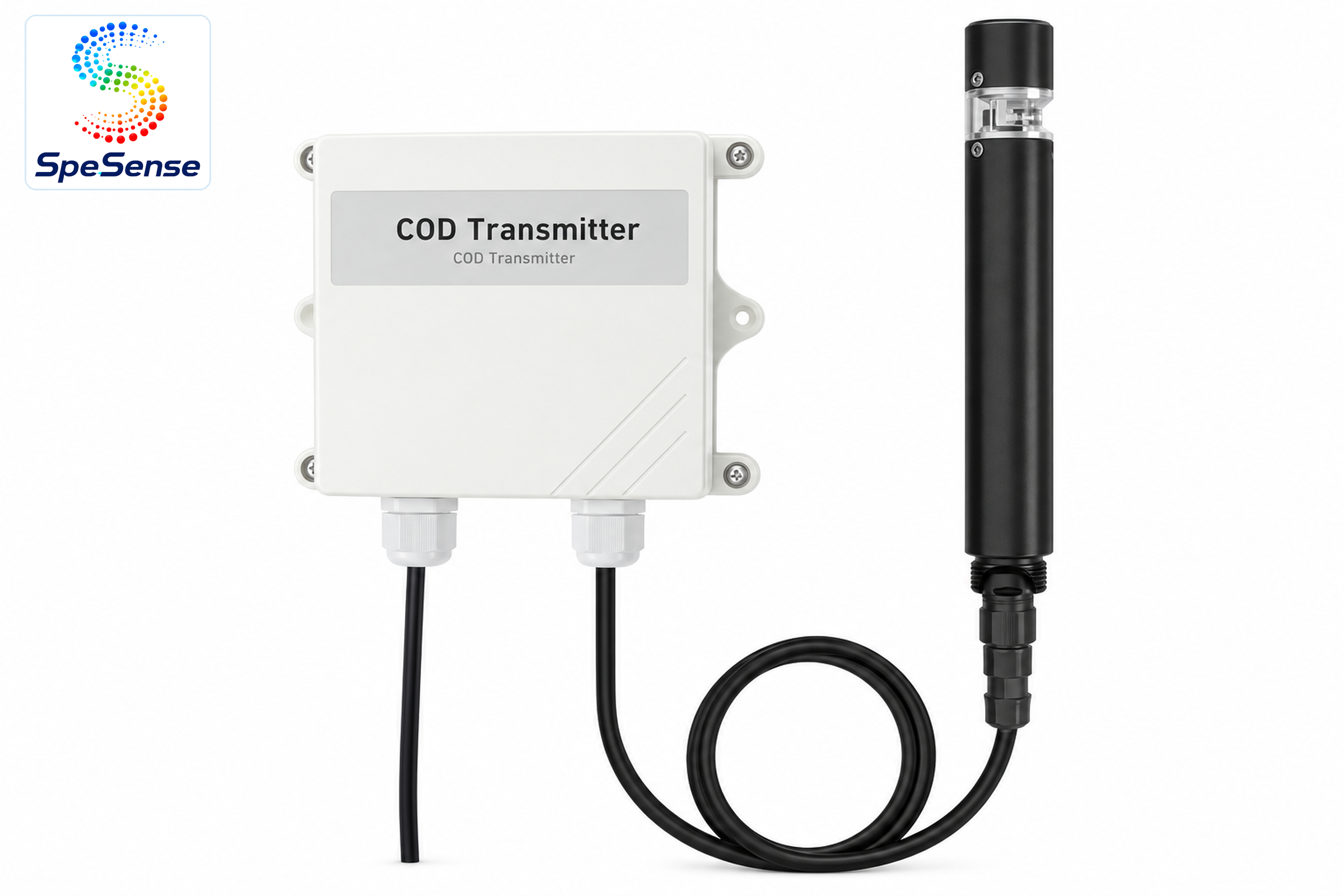
SS306-01-WIFI
自清洗 COD 变送器
产品亮点
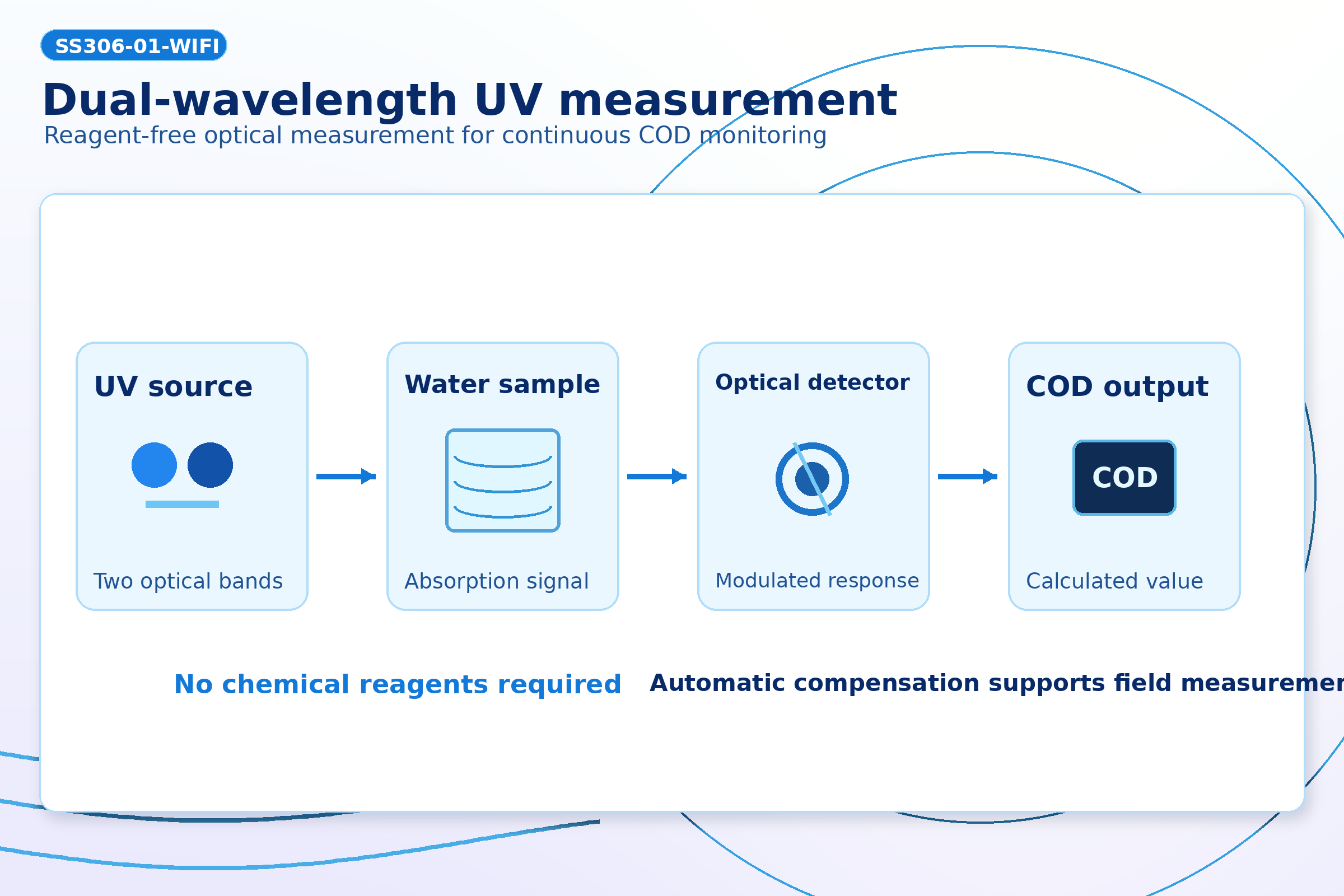
● Reagent-free dual-wavelength UV absorption.
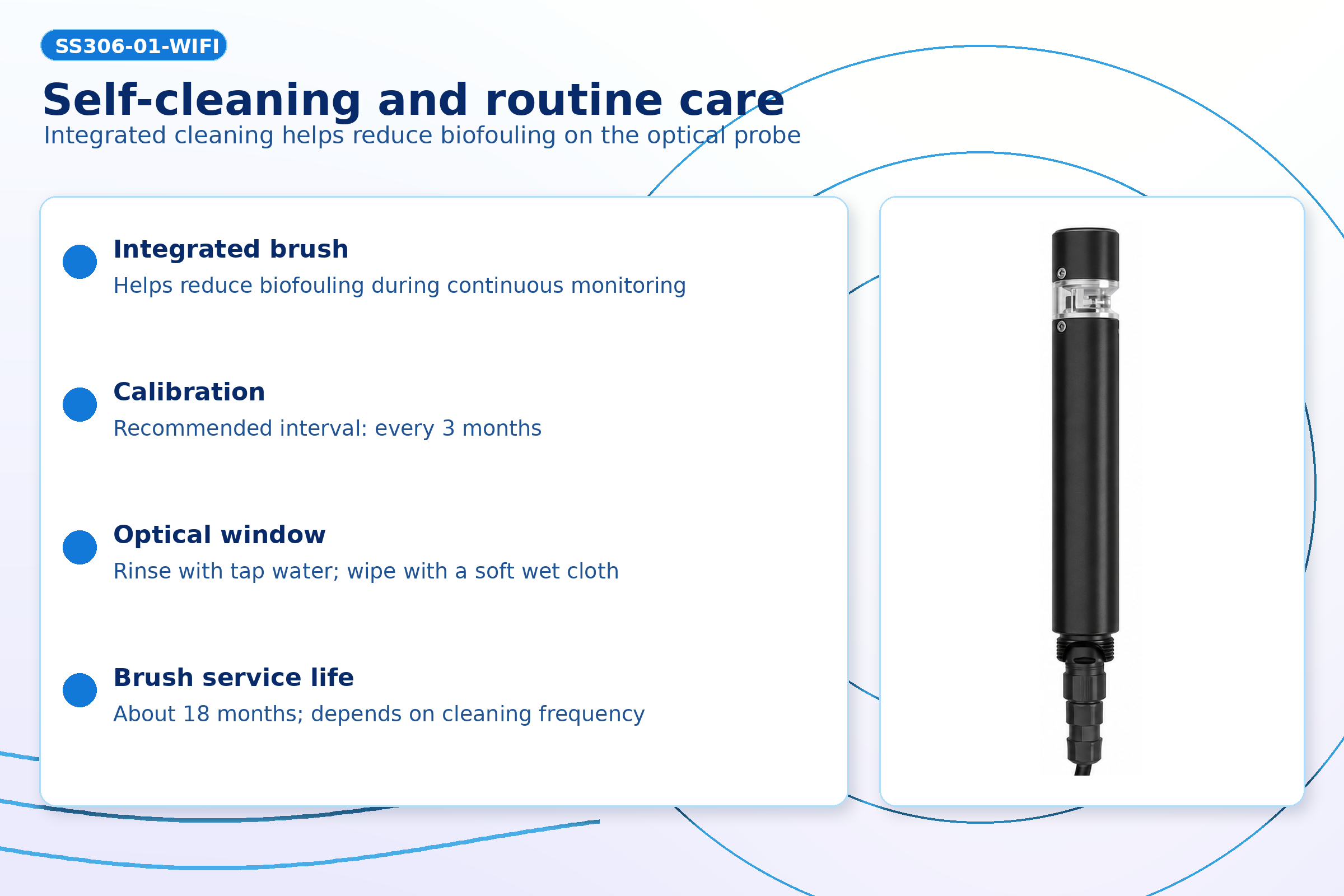
● Integrated self-cleaning against biofouling.
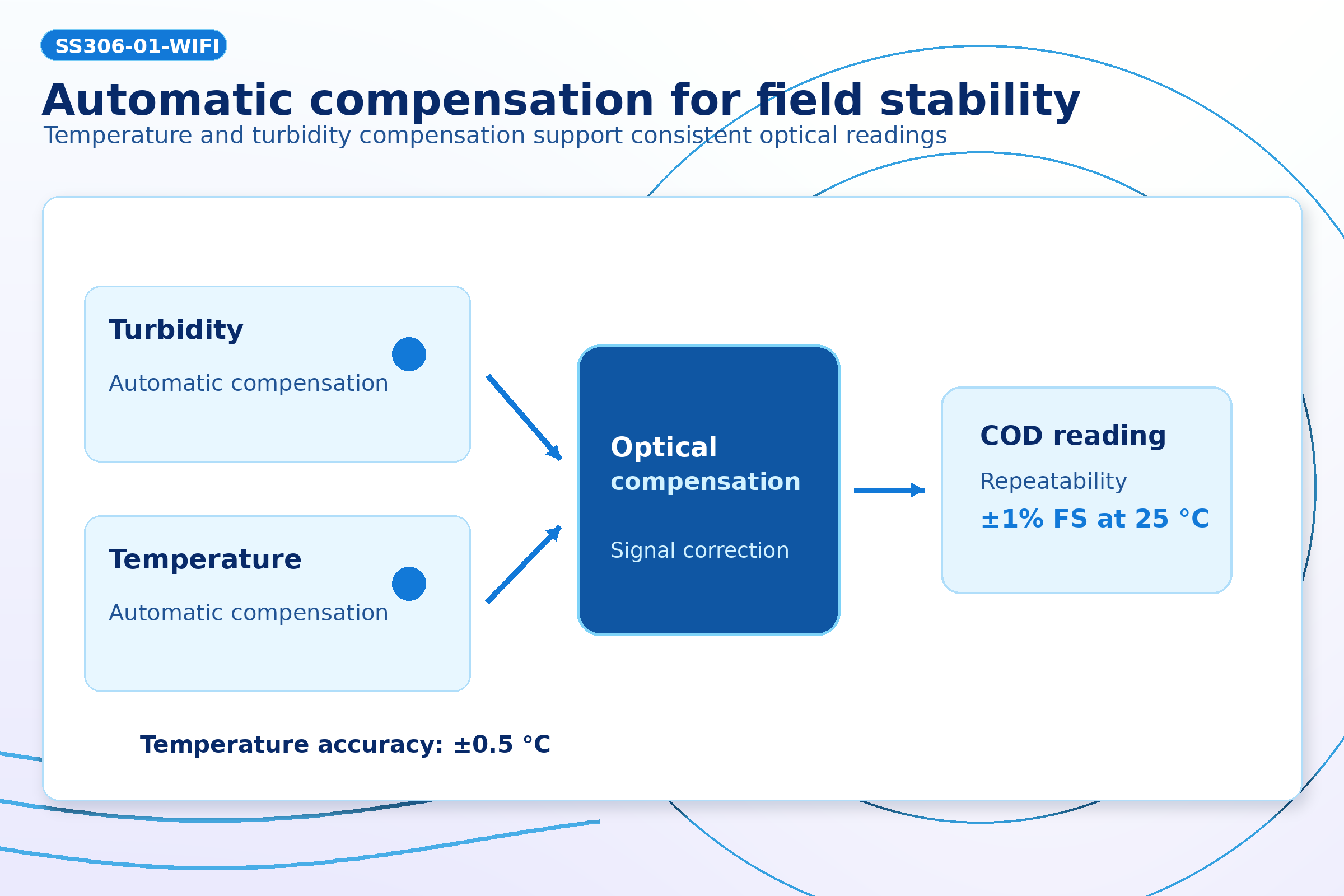
● Automatic turbidity and temperature compensation.
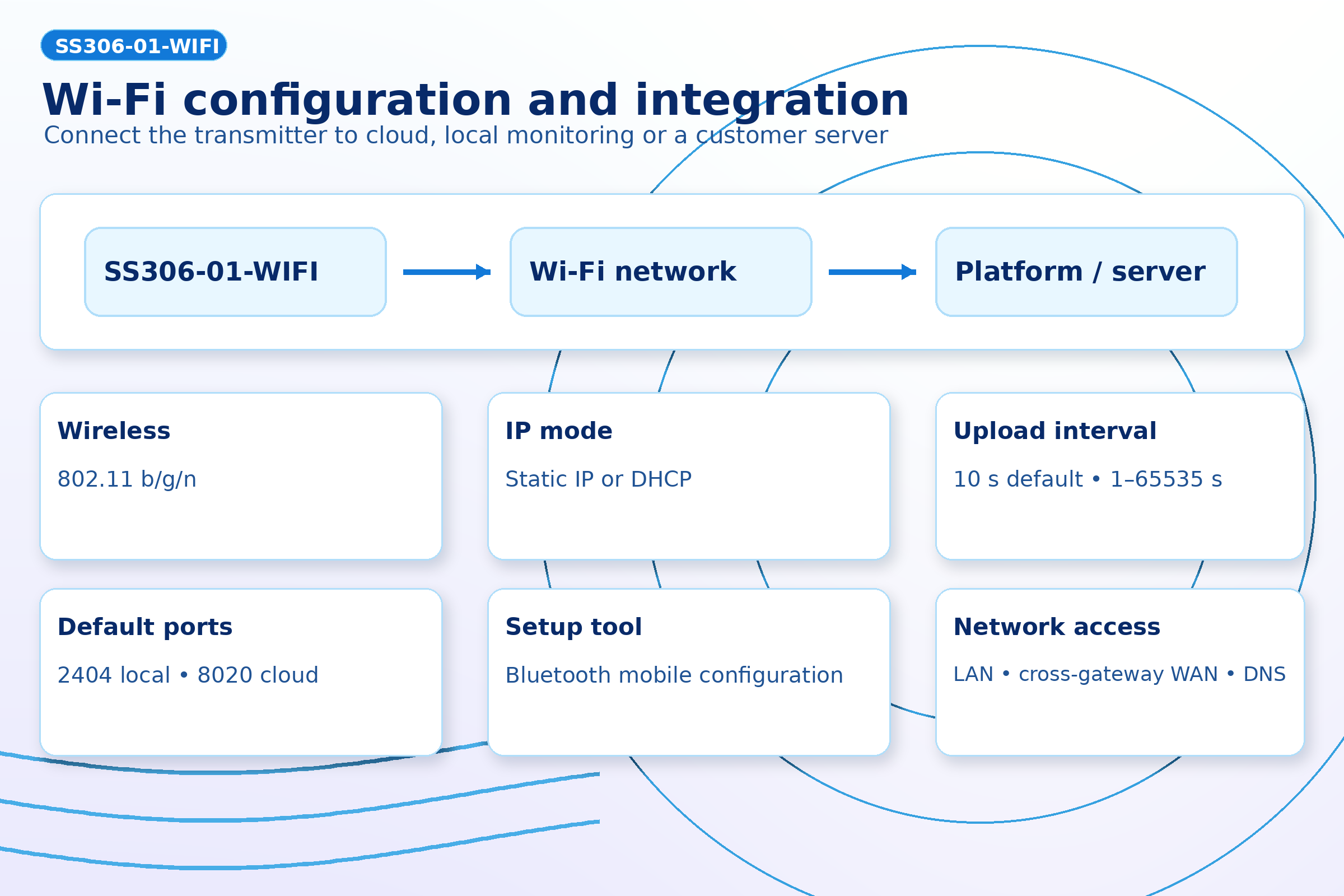
● Wide 9–30 VDC supply and configurable Wi-Fi upload interval.
● Integrated self-cleaning against biofouling.
● Automatic turbidity and temperature compensation.
● Wide 9–30 VDC supply and configurable Wi-Fi upload interval.
产品概述
• SS306-01-WIFI measures chemical oxygen demand (COD) using dual-wavelength ultraviolet absorption without chemical reagents.
• The integrated self-cleaning system reduces biofouling, with automatic temperature and turbidity compensation for field stability.
• Measured data can be uploaded over Wi-Fi to a customer server or cloud platform for web, desktop and mobile access.
| Item | Specification |
| Power Supply | DC 9–30 V |
| Typical Power Consumption | ≤1 W normal; ≤1.7 W during self-cleaning |
| Communication / Upload | WIFI via 802.11b/g/n |
| Measurement Principle | Dual-wavelength ultraviolet absorption |
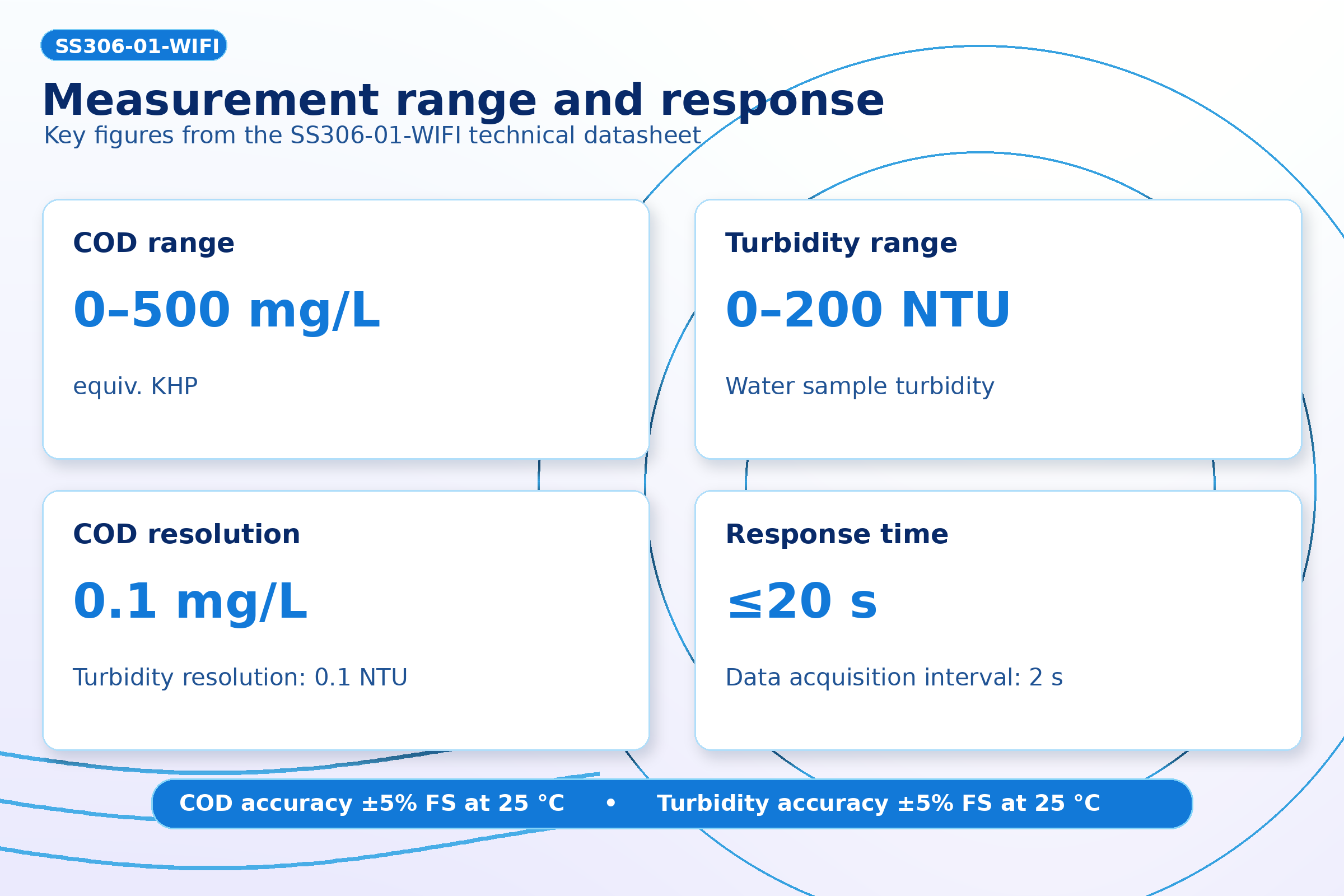
| COD Measurement Range | 0–500 mg/L equiv. KHP |
| Turbidity Measurement Range | 0–200 NTU |
| COD Measurement Accuracy | ±5% FS equiv. KHP at 25 °C |
| Turbidity Accuracy | ±5% FS at 25 °C |
| COD Resolution | 0.1 mg/L |
| Turbidity Resolution | 0.1 NTU |
| Temperature Resolution | 0.1 °C |
| Temperature Accuracy | ±0.5 °C |
| Repeatability | ±1% FS equiv. KHP at 25 °C |
| Response Time | ≤20 s |
| Operating Conditions | Probe: 0–40 °C; enclosure: −40–60 °C, 0–95% RH non-condensing |
| Ingress Protection | Probe IP68; enclosure IP65 |
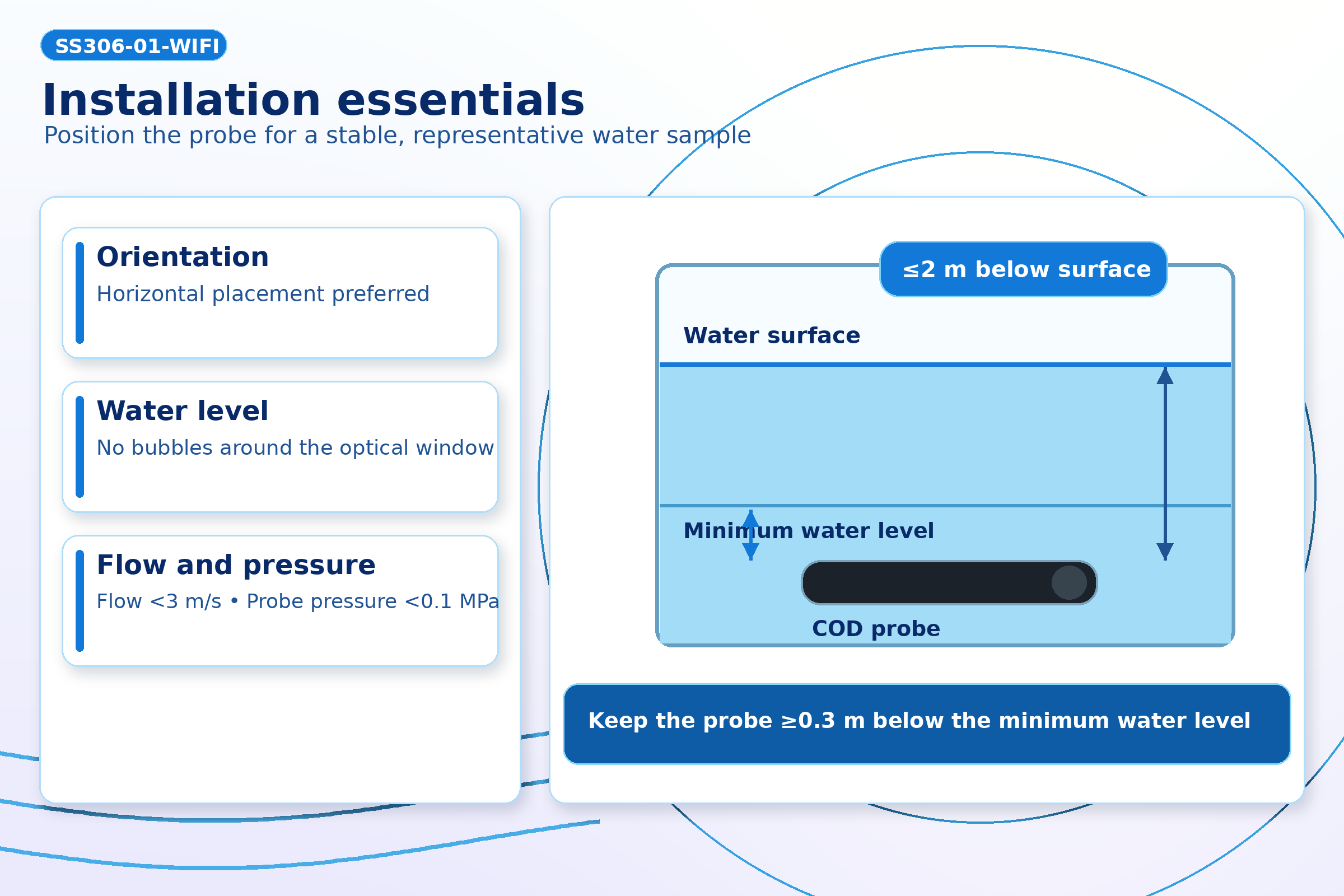
| Flow Velocity | <3 m/s |
| Probe Pressure Resistance | <0.1 MPa |
| Data Upload Interval | Default 10 s; 1–65535 s configurable |
| Data Acquisition Interval | 2 s |
| Wi-Fi Parameters | 802.11b/g/n |
| Security / Encryption | WEP, WPA-PSK or WPA2-PSK / WEP, TKIP or AES |
| Cable Length | 5 m by default; custom length available |
| Housing Material | Corrosion-resistant plastic and stainless steel |
| Recommended Calibration / Maintenance | Every 3 months |
| Self-cleaning System Life | About 18 months; depends on cleaning frequency |